
Details:
Date: Wednesday 22nd – Sunday 26th July
Retreat Leader: Geshe Thubten Sherab
Requirements: Everyone is welcome
Cost: Generosity Model – Donation only (by clicking the ‘Donate Here’ button below). Land of Joy provides: All meals, accommodation, workshops, materials and good firewood for soulful nights.
Format: Onsite only / Retreat begins: 7pm on the 22nd July / Retreat ends: with lunch on 26th July
Recommended arrival: 3pm – 5pm on the 22nd uly to join for supper and get settled into the space
Accommodation: Land of Joy wishes for everyone who visits the centre to feel welcome, accepted, safe and secure. Our accommodation options are very limited, with mostly single-sex shared accommodation and a very limited number of single rooms. Single accommodation can therefore only be offered on a priority basis. Please read the relevant sections of the booking form carefully.
About the Retreat
Land of Joy warmly welcomes Geshe Thubten Sherab for a retreat exploring the profound wisdom of The Heart Sutra, one of the most treasured and widely studied texts of the Mahayana Buddhist tradition. Though brief in length, the Heart Sutra contains the essence of the Buddha’s teachings on emptiness, pointing directly to the nature of reality and the wisdom that frees the mind from confusion and suffering.
During this retreat, Geshe Thubten Sherab will guide participants through the meaning of the Heart Sutra with clarity and warmth, helping to unpack its essential message and its relevance for daily life and spiritual practice. Through teachings, meditation, and discussion, the retreat offers a valuable opportunity to explore this foundational text in a supportive environment.
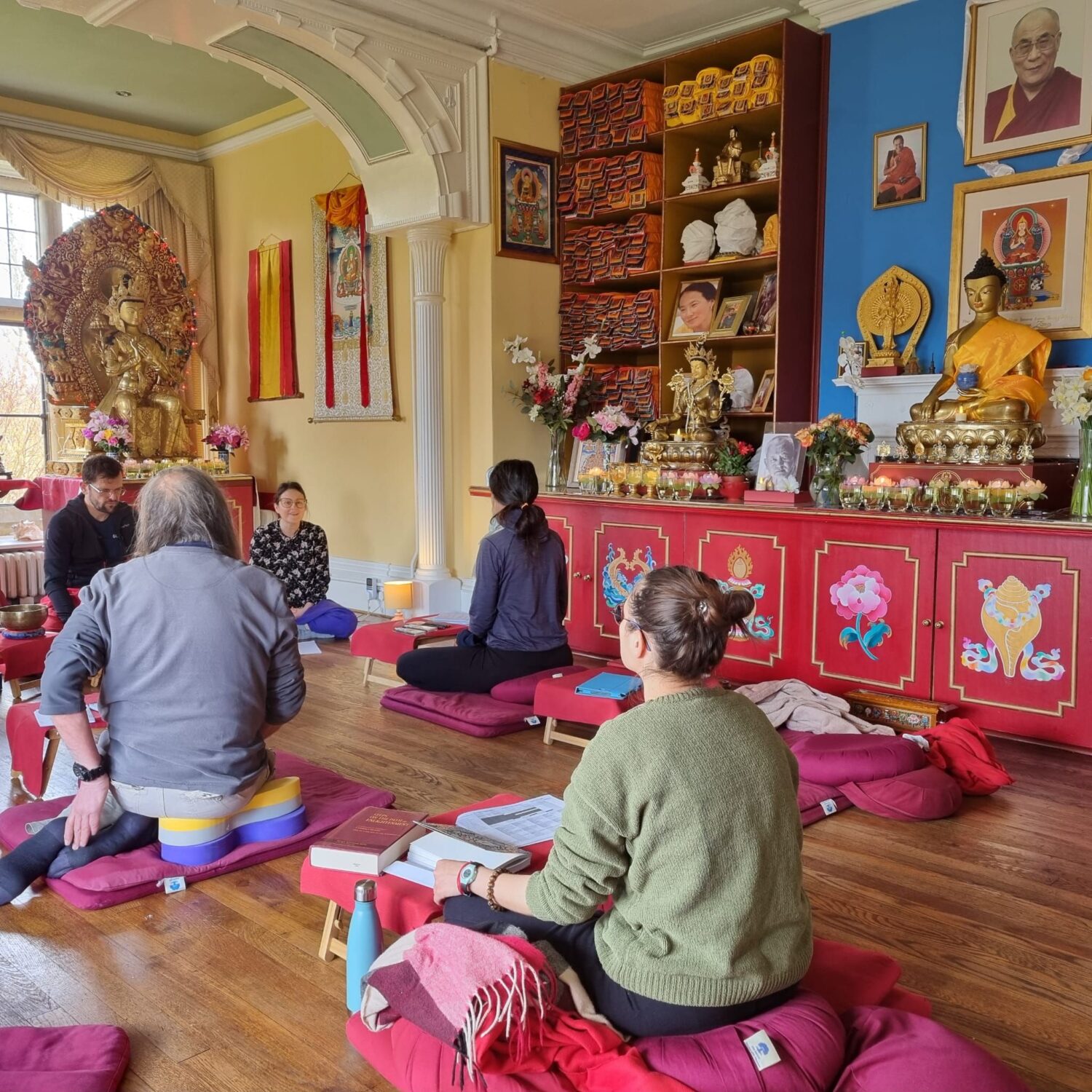
Each day will include periods of teaching, guided meditation, and time for questions and discussion, allowing participants to reflect on the teachings and deepen their understanding. Time will also be set aside for quiet contemplation and personal practice, creating space for the insights of the Heart Sutra to settle and become more experiential.
Who Is This For?
This retreat is open to anyone with an interest in Buddhist wisdom teachings and the nature of the mind. The Heart Sutra is both simple in its wording and profound in its meaning, making it a text that can benefit practitioners at many different stages of the path. Whether you are approaching Buddhist philosophy for the first time or have studied the teachings for many years, the retreat offers a supportive space to explore the meaning of emptiness in a clear and accessible way, allowing familiar words to reveal deeper layers of understanding through reflection, meditation, and discussion.
- Those new to Buddhist philosophy who would like a clear introduction to the teachings on emptiness.
- Practitioners wishing to deepen their understanding of the Heart Sutra and the wisdom teachings of the Mahayana tradition.
- Anyone interested in exploring the nature of reality, perception, and the mind through meditation and study.
- Students who appreciate learning directly from an experienced Buddhist teacher in a retreat setting.
Why Attend?
The Heart Sutra is one of the most influential texts in Buddhism because it expresses the profound insight that all phenomena are empty of inherent existence. Understanding this teaching is said to loosen the grip of confusion, helping us relate to life with greater clarity, compassion, and freedom.
Attending this retreat offers the opportunity to:
- Gain a clear and practical understanding of the Heart Sutra.
- Explore the teachings on emptiness in a guided and accessible way.
- Combine study with meditation, allowing wisdom to become more than just an intellectual idea.
- Spend time in a quiet retreat environment, away from daily distractions.
- Receive teachings directly from Geshe Thubten Sherab, whose experience and approachable teaching style make profound ideas accessible.
Why Attend?
The retreat will follow a gentle and supportive rhythm, balancing teachings, meditation, and opportunities for reflection. This structure allows participants to absorb the teachings gradually, explore their meaning through discussion, and deepen their understanding through personal contemplation and practice.
- Daily teachings on The Heart Sutra from Geshe Thubten Sherab.
- Guided meditation sessions to help bring the teachings into direct experience.
- Opportunities for questions and discussion to explore the meaning of the text.
- Time for quiet contemplation and personal reflection.
- A retreat environment designed to support reflection, with comfortable accommodation and nourishing vegetarian meals.
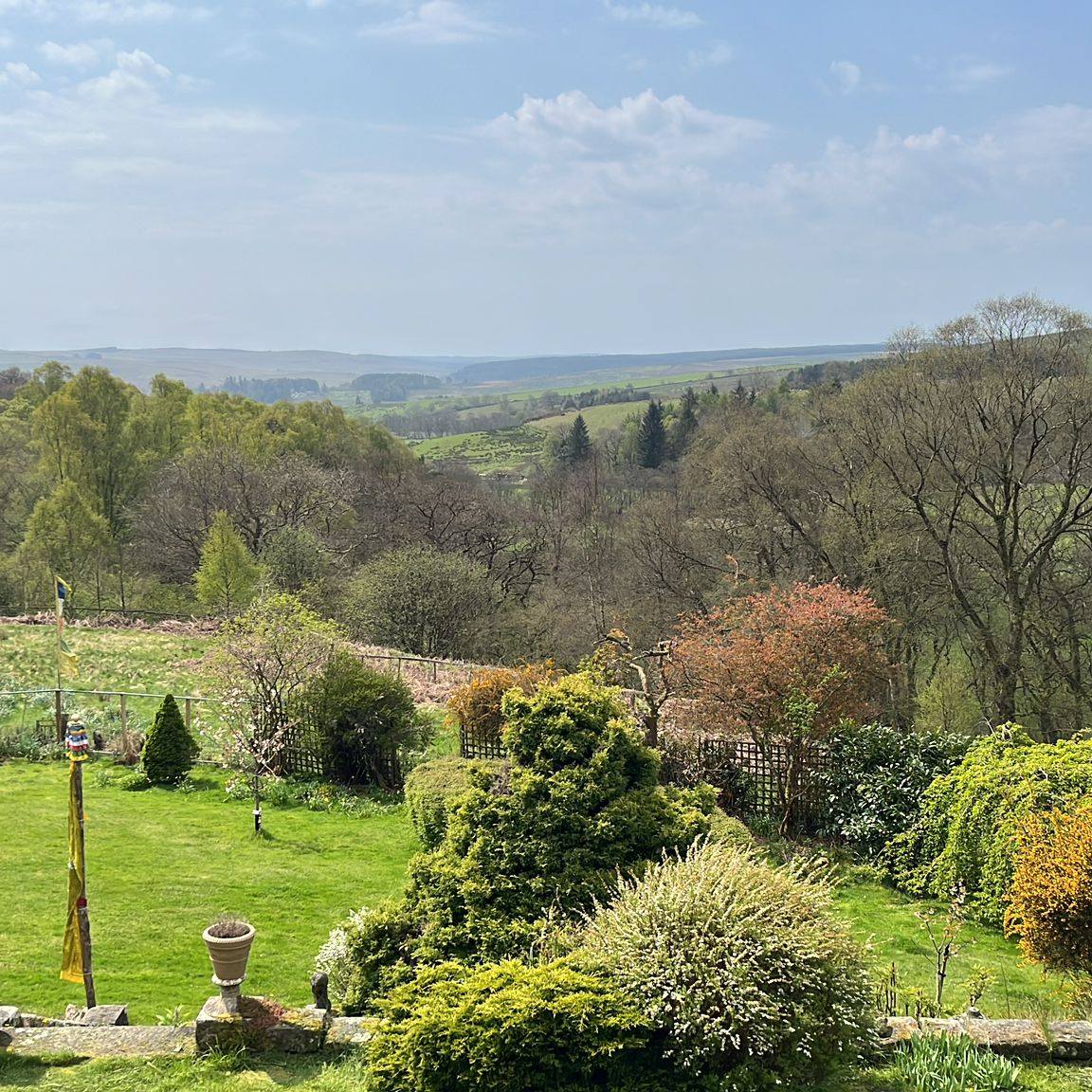
- The peaceful surroundings of Land of Joy, including forest and open skies that encourage calm, clarity, and connection with the path.
Retreat Boundaries:
To help create the best conditions for meditation practice, this retreat will be held within a supportive framework:
- Silence – Silence will be observed outside of group sessions during some periods of the day to encourage calm and inward focus.
- Technology-free space – You will be encouraged to switch off phones, laptops and other devices for the duration of the retreat, except for reading texts and other dharma related material.
- Respecting the schedule – Participants are asked to attend all sessions on time, as consistency supports both personal practice and the group environment.
- Mindful living – Meals and daily activities will be approached with awareness, becoming part of the retreat practice itself.
These boundaries are not restrictions but supports — creating a safe, focused space in which the mind can settle and deepen.
About Geshe Thubten Sherab
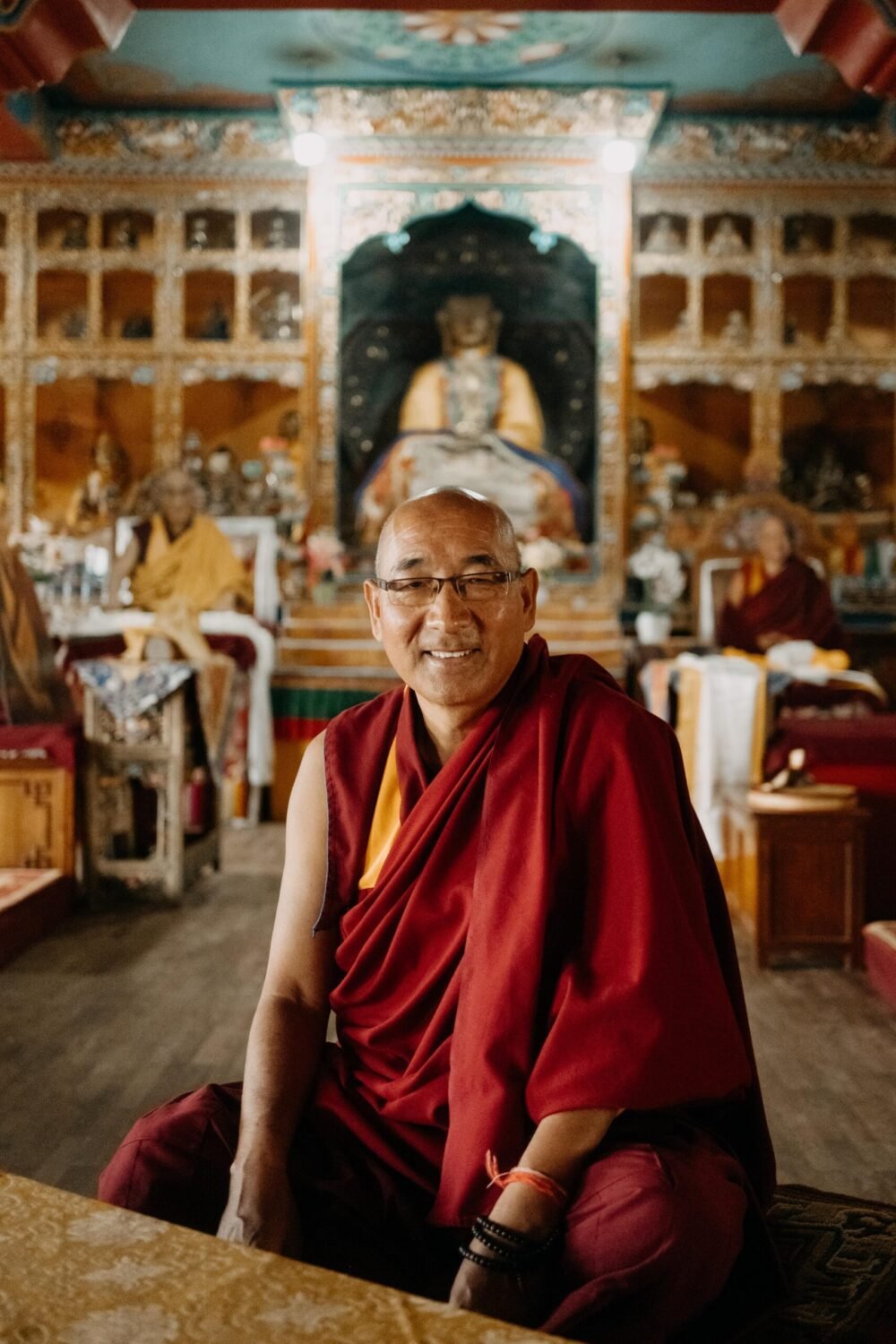
Geshe Thubten Sherab was born in a small village in the western part of Nepal to a Kagyu-Nyingma family.. He entered Kopan Monastery at the age of nine and completed his Geshe studies at the famous Sera Je monastery in South India, followed by a year at Gyumed Tantric College.
He then completed retreat and teaching assignments in the United States and Asia. Since then, Geshe Sherab has Hi served the Foundation for Preservation of Mahayana Tradition (FPMT) in several roles. For the last few years, Geshe-la has been traveling and teaching at FPMT centers in the United States, Canada, Mexico, Asia, and Europe, while also serving as resident teacher at Thubten Norbu Ling in Santa Fe, New Mexico.
Geshela has a unique gift of presenting often complex Buddhist topics in a simple, warm and accessible manner. He has much experience with Western students, which helps him to explain Dharma to us in a practical and applicable way.
Geshela says : “I believe Geshes need to think about how to benefit more people, whether they are Buddhist or not. My view is that it doesn’t matter whether people follow the traditional way of practicing or even if they are Buddhist. There are so many good aspects of the Dharma that we can share with them. We sincerely need to respect all other religious traditions, not just with our mouths, but with our hearts. We have His Holiness the Dalai Lama as an example of how to treat other religions with respect.
“We also need to understand Western culture and psychology so that we, as Geshes, can be more effective and bring more benefit. However, we should not take too many liberties in changing the traditional ways of doing things, just because it doesn’t suit the Westerners’ way or because they don’t like it. We should always think of the long-term benefit as opposed to simply short-term results.
“For beginners in the Dharma, the most important thing is to try and integrate one’s study and practice. Some are only into studying, they focus only on the intellectual. They have knowledge like a computer, but this knowledge never really touches the heart. This kind of individual becomes very arrogant and tends to look down on other people with less learning.
“Then there are also people who do no study, thinking that all they need to do is practice. But how can you practice if you haven’t studied? Study is crucial. Without study, the wrong teacher can easily misguide, take advantage of, and exploit students. Of course, I would emphasize this is my own personal view and I do not mean to imply criticism of anyone.
My final request of my students is to integrate study and practice together, which has always been the advice of His Holiness the Dalai Lama and of Lama Zopa Rinpoche.”