
Details:
Date: Friday 9th – Monday 12th April
Retreat Leader: Andy Wistreich
Requirements: To be a highest Yoga Tantra practitioner
Cost: Generosity Model – Donation only (by clicking the ‘Donate Here’ button below). Land of Joy provides: retreat organisation, meals, accommodation, teachings, and materials.
Format: Onsite only / Retreat begins: 7pm on the 9th April / Retreat ends: with lunch on 12th April
Recommended arrival: 3pm – 5pm on the 9th October to join for supper and get settled into the space
Accommodation: Land of Joy wishes for everyone who visits the centre to feel welcome, accepted, safe and secure. Our accommodation options are very limited, with mostly single-sex shared accommodation and a very limited number of single rooms. Single accommodation can therefore only be offered on a priority basis. Please read the relevant sections of the booking form carefully.
About the Retreat
EVAM points towards something at the heart of Highest Yoga Tantra: the nondual awareness of bliss and emptiness.
Rather than focusing on one particular deity or practice, this retreat will explore the common ground underlying different Highest Yoga Tantra systems. Drawing on teachings and practices from traditions including Vajrayogini, Yamantaka, Kalachakra, Guhyasamaja and Chakrasamvara, Andy Wistreich will guide participants in exploring the meaning of EVAM and what it reveals about the nature of ourselves, our experience and the world around us.
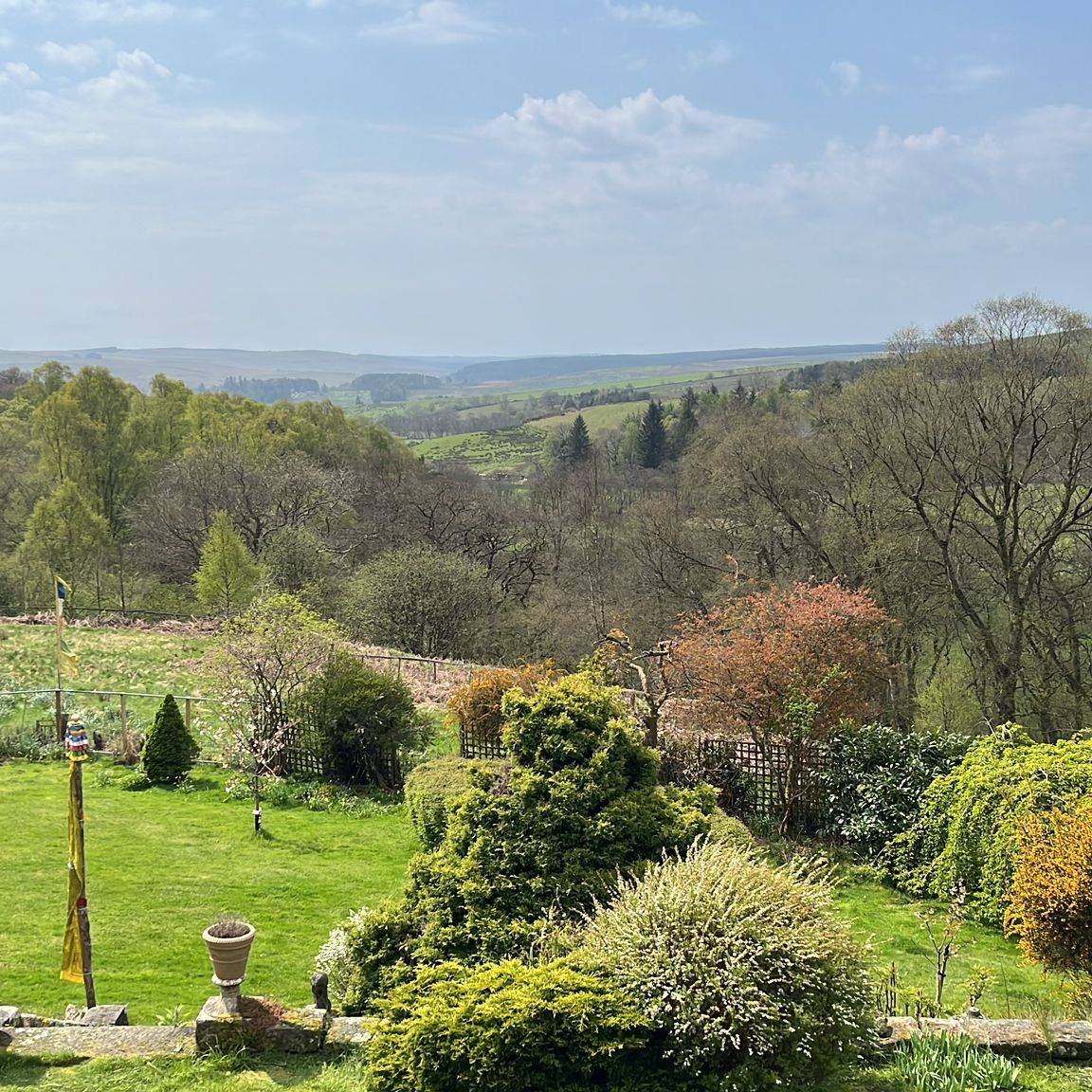
Alongside teachings and meditation, the retreat will include experiential practice in the natural environment, creating opportunities to explore emptiness and nonduality not simply as ideas, but in relation to our direct experience.

What will be offered:
The retreat will combine teachings, meditation, reflection and experiential practice, including:
- Exploring the meaning and significance of EVAM
- The non-dual awareness of bliss and emptiness
- The common ground underlying different Highest Yoga Tantra systems
- Teachings and references drawn from a range of Highest Yoga Tantra practices and commentaries
- Meditation and reflection on emptiness and non-duality
- Experiential practices outdoors, including contemplative walking and connecting with the natural environment
There will also be space to deepen your understanding through practice and reflection over the course of the retreat.
Who is this for?
This retreat is for practitioners of Highest Yoga Tantra from any Highest Yoga Tantra tradition.
You do not need to practise a particular deity, as the retreat is specifically designed to explore what is shared across different systems rather than concentrating on one particular sadhana or practice.
Participants will therefore need to have received an appropriate Highest Yoga Tantra empowerment.

Why Attend?
This retreat offers an opportunity to step beyond a focus on any single deity practice and explore some of the principles that lie at the heart of Highest Yoga Tantra.
- It may be particularly valuable if you would like to:
- Deepen your understanding of bliss, emptiness and nonduality
- Explore the connections between different Highest Yoga Tantra systems
- Bring greater meaning and context to your own tantric practice
- Explore emptiness through both meditation and direct experience
- Spend several days practising within the supportive environment of retreat
Retreat Boundaries
To help create the best possible conditions for retreat, the group will be observing the following boundaries:
- Keeping continuity of practice – following the daily schedule of sessions helps sustain focus and momentum.
- Respecting ethical conduct – refraining from distractions such as phones, non-Dharma activities & following the five precepts..
- Treating the dharma with respect – treating the sadhana, mantras, visualisations, and rituals with care and respect.

Andy Wistreich
Andy has been studying, practising and teaching Dharma in FPMT for almost forty years. During that time he practised Yamantaka daily, completing his first enabling retreat in 1983.
His main teacher Geshe Wangchen gave him oral instructions on all aspects of Yamantaka practice, so his practice is very personally derived from his Guru and his Guru’s Gurus.