
Details:
Date: Friday 25th June – Sunday 27th June
Retreat Leader: Ven Mary Reavey
Requirements: Everyone is welcome
Cost: Generosity Model – Donation only (by clicking the ‘Donate Here’ button below). Land of Joy provides: All meals, accommodation, workshops, materials and good firewood for soulful nights.
Format: Onsite only / Retreat begins: 7pm on the 25th June / Retreat ends: with lunch on 27th June
Recommended arrival: 3pm – 5pm on the 25th June to join for supper and get settled into the space
Accommodation: Land of Joy wishes for everyone who visits the centre to feel welcome, accepted, safe and secure. Our accommodation options are very limited, with mostly single-sex shared accommodation and a very limited number of single rooms. Single accommodation can therefore only be offered on a priority basis. Please read the relevant sections of the booking form carefully.
About the Retreat
Death is something we will all experience, yet we rarely take time to consider how we might prepare for it. Buddhist teachings encourage us to face this reality not with fear, but as an opportunity to live with greater awareness and purpose.
Drawing on teachings on karma and the Five Powers, this retreat will explore how the way we live now can help us approach death with greater peace, understanding and fewer regrets. We will look at what we can do practically to prepare, as well as the qualities and states of mind we can cultivate throughout our lives.
By becoming more familiar with death, we can begin to understand what might support us when the time comes, while also discovering how an awareness of our mortality can help us live more fully now.
What Will be Offered?
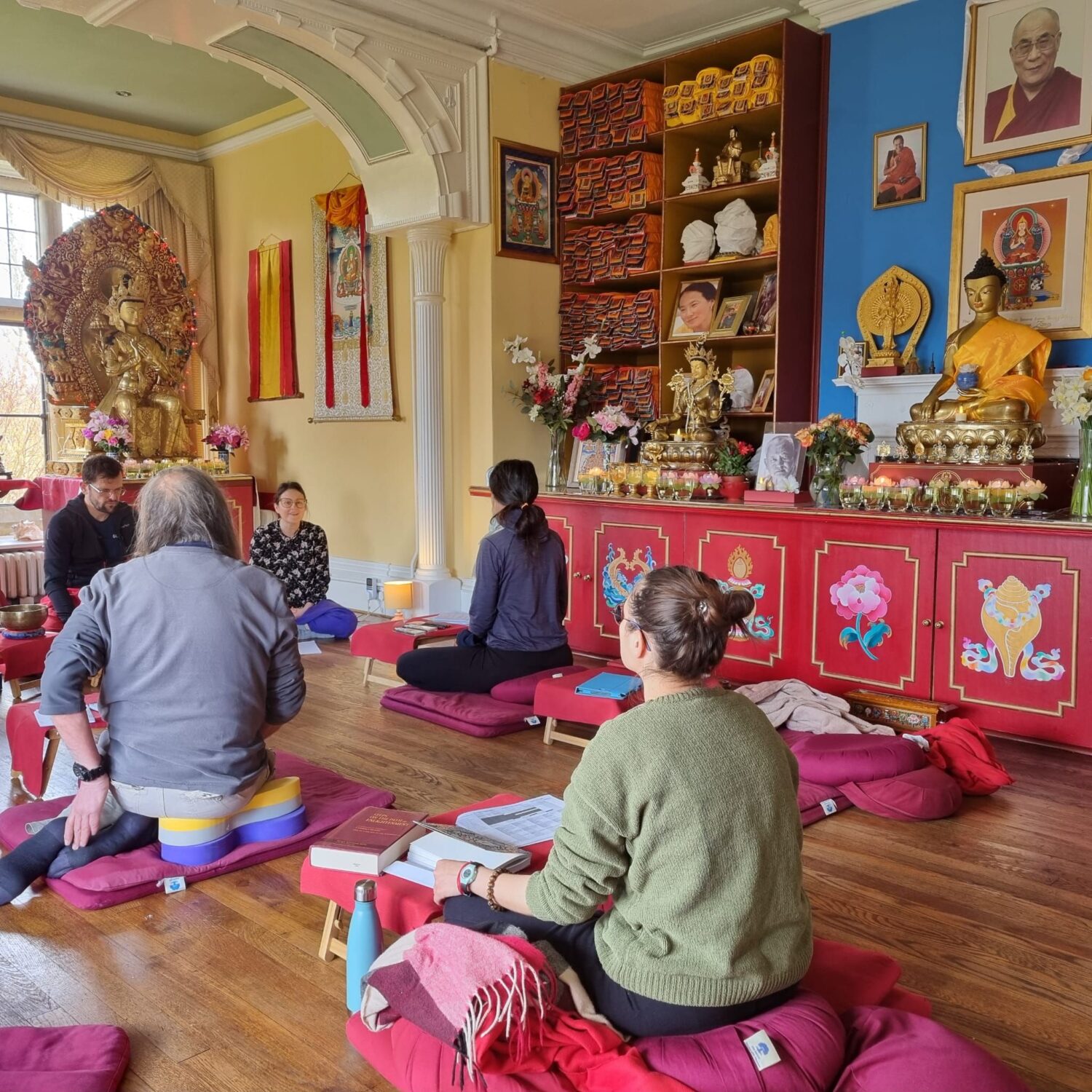
The retreat will combine Buddhist teachings, meditation, personal reflection, discussion and Q&A, with opportunities to explore both the contemplative and practical aspects of preparing for death.
We will explore:
- Buddhist perspectives on death, dying and karma
- The Five Powers and how they can support us throughout life and at the time of death
- Meditation and reflection on death and impermanence
- Practical steps we can take to prepare for our own death
- What it might mean to live and die with fewer regrets
There will be space to reflect on your own relationship with death and consider how these teachings and practices can be brought into everyday life, within a supportive environment where this sometimes difficult subject can be explored openly.
Who is This For?
This retreat is for anyone who would like to explore death and dying in a thoughtful and practical way through Buddhist teachings and practice.
It may be particularly valuable if you want to feel more prepared for your own death, are supporting someone who is dying, or are interested in how contemplating death can influence the choices we make and the way we live.
You do not need to be Buddhist or have any previous experience of meditation or retreat. Those with an established Buddhist practice are equally welcome.

Why Attend?
This retreat offers an opportunity to:
- Develop a greater understanding of death and dying from a Buddhist perspective
- Explore your own thoughts and feelings about death
- Feel more practically and emotionally prepared for your own death
- Learn practices that can support peaceful dying and a more peaceful death
- Discover how an awareness of death can bring greater clarity and appreciation to life

Retreat Boundaries
To help create the best conditions for meditation practice, this retreat will be held within a supportive framework:
- Silence – Silence will be observed outside of group sessions during some periods of the day to encourage calm and inward focus.
- Technology-free space – You will be encouraged to switch off phones, laptops and other devices for the duration of the retreat, except for reading texts and other dharma related material.
- Respecting the schedule – Participants are asked to attend all sessions on time, as consistency supports both personal practice and the group environment.
- Mindful living – Meals and daily activities will be approached with awareness, becoming part of the retreat practice itself.
These boundaries are not restrictions but supports — creating a safe, focused space in which the mind can settle and deepen.

About Ven Mary Reavey
